

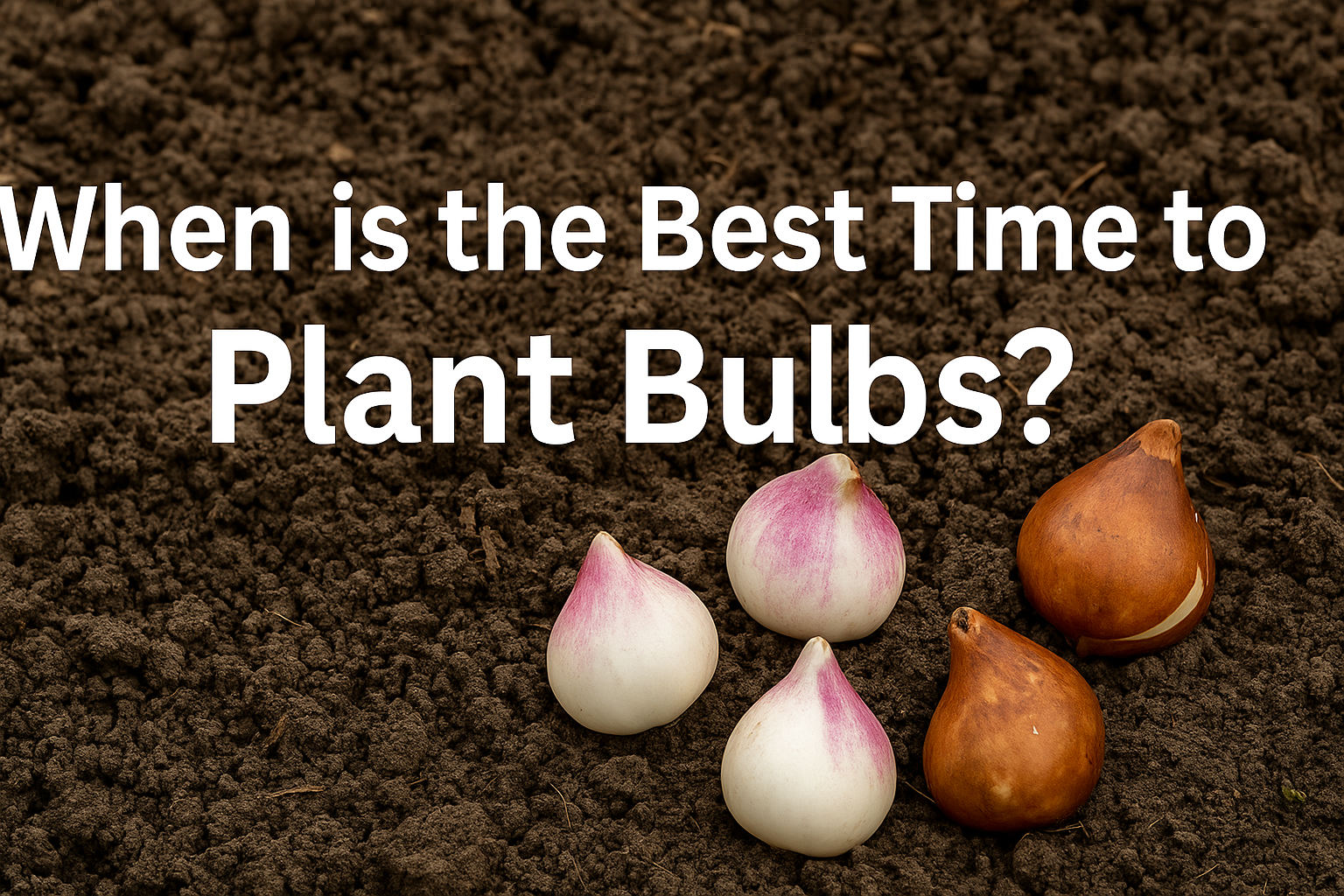
As you plan your garden, you may wonder: when is the best time to plant bulbs? Getting the timing right makes a huge difference. Plant too early or too late and you risk weak roots, few blooms, or even rot. This guide walks you through the “why,” “when,” and “how” with smart, actionable advice for U.S. gardeners.
Johnson County (K-State) says:
“For spring bulbs: plant before soil temperatures drop below 45 °F.”
Why timing matters
Bulbs are a clever little storage organ full of potential energy. They must sit in the ground long enough to develop roots before winter, then break dormancy and bloom in spring or summer. If you skip or mess up the timing:
-
Roots don’t form properly.
-
The bulb may sprout prematurely and freeze.
-
Soil may be too warm or wet → rot.
Experts say: “Planting at the right time is one of the keys to the success of spring-flowering bulbs.”
Also, your local climate and USDA zone change the timing. Soil temperature matters as much as air temperature. One expert says:
“As long as the soil temperatures are above 40 °F, the bulbs should continue root development.” — Ward Upham
This means you can’t just follow one fixed calendar date everywhere.
Two main bulb groups & their timing
To simplify: there are two broad groups — spring-flowering bulbs and summer-flowering bulbs (and some fall-flowering ones). Each group has different timing.
Spring-flowering bulbs
Examples: Tulipa (tulips), Narcissus (daffodils), Crocus, Hyacinthus.
These are best planted in fall, well before winter.
According to the Kansas State University Extension:
“Plant spring flowering bulbs in October and November before winter arrives.”
And according to the Pennsylvania Horticultural Society:
“Planting them in the fall allows time for root systems before winter.”
A recent article states:
“Most spring bulbs need 10 or 12 weeks of cold temperatures in order to develop properly.”
Bottom line: for the USA, aim for 6-8 weeks before the ground freezes (or when soil temps fall to about 40-50 °F).
Summer-flowering bulbs
Examples: Dahlia, Gladiolus, Canna.
These don’t need the long cold dormancy. They are planted in spring, after risk of frost has passed and soil has warmed.
In warmer zones, “planting after the last spring frost” is the guideline.
When is the best time by zone
Let’s apply timing to zones — because across the U.S., climate shifts a lot.
-
Soil temperature matters. Plant when soil has cooled for spring bloomers or warmed for summer ones.
-
For spring-flowering bulbs: when daytime air drops below about 60 °F and soil still workable.
-
For warm-winter zones (Zones 9-10) you may need pre-chilling bulbs because you lack a true winter.
Here are rough guidelines:
-
Zones 3-5 (cold winters): Late September to mid-October.
-
Zone 6: Mid-October.
-
Zones 7-8: Early to mid-November.
-
Zones 9-10: Early December (or pre-chill bulbs).
If soil is too warm, root formation stalls. If ground freezes before planting, you may have poor root development.
How to test your soil & planting window
-
Use a soil thermometer. The bulb expert Brent Heath suggests:
“Bulbs root best when the soil temperature is between 50° and 60° Fahrenheit.”
-
If your soil is still above 60 °F in fall for spring bulbs, wait a little.
-
If the ground is frozen or soggy, too late.
-
For spring planting of summer bulbs: ensure no frost risk and soil has warmed (often mid to late spring).
Best practices for planting bulbs
Good timing alone isn’t enough. Here are key steps to maximise success.
1. Choose healthy bulbs
Look for firm, plump bulbs. Avoid soft, moldy, or sprouting ones. K-State says pick large, firm bulbs.
2. Pick a good location
-
Full sun or part sun (many bulbs need ~6 hours).
-
Well-drained soil is critical. Bulbs left in water-logged soil tend to rot.
-
Avoid spots that stay soggy all winter.
3. Plant at correct depth and spacing
-
General rule: plant bulbs at a depth ~2-3 times their height.
-
Place the pointed end up (if identifiable).
-
Space bulbs apart so they each have room to grow.
4. Plant before the ground freezes (for spring bulbs)
-
Aim for about 6-8 weeks before first hard frost (or when soil still workable).
-
After planting, add a thin mulch layer to hold moisture and moderate soil temperature.
5. For warm climates: pre-chill bulbs if needed
In zones where winter is mild, bulbs may not get enough cold. Pre-chill in the refrigerator for 10-12 weeks.
What if you miss the “ideal” window?
Don’t panic — there are options.
-
If you plant spring bulbs too late (ground freezing soon), they may still survive but produce fewer blooms or delayed growth.
-
Consider planting in containers and chilling bulbs artificially.
-
If you miss fall for spring-flowerers, switch to summer-flowering bulbs instead.
-
Take note for next year and plan earlier.
Some bulbs will naturalize and return year after year if planted correctly.
Quick check-list before you plant
-
Is the bulb firm and healthy?
-
Is the soil workable (not frozen or soggy)?
-
Does the zone meet timing guidelines?
-
Has soil been amended if heavy clay or poorly drained?
-
Did you plant at correct depth and orientation?
-
Did you mulch lightly (if fall plant)?
Tick each box. Then proceed confidently.
Myth-busters
-
Myth: “You must plant bulbs only in September.”
Truth: It depends on zone and soil temp. Some areas plant later (even into December) if soil is still workable. -
Myth: “Any time of day is fine.”
Truth: Timing in the season and soil conditions matter more than hour-to-hour. -
Myth: “Once planted, I don’t need to worry about them.”
Truth: Aftercare matters: mulch, protect from rodents, deadhead after bloom, let foliage die back naturally.
Frequently Asked Questions (FAQ)
Q1. What is the best time to plant spring-flowering bulbs in the USA?
A1. Usually in the fall, about 6 to 12 weeks before the first hard frost, when soils have cooled but are still workable. For colder zones that might be late September; for warmer zones maybe November or December.
Q2. Can I plant bulbs in spring for spring blooms?
A2. Not reliably. Spring-blooming bulbs need a period of cold root establishment in fall. If planted in spring, they likely won’t bloom. For spring planting, focus on summer-flowering bulbs instead.
Q3. My soil is clay and drains poorly — can I still plant bulbs?
A3. Yes — but you must improve drainage by adding organic matter, grit or sand. Bulbs hate wet feet or water-logged soil.
Q4. I live in a warm-winter region (Zone 9 or 10) — what then?
A4. You may need to pre-chill spring-flowering bulbs in a refrigerator for ~10-12 weeks before planting. Alternatively, choose bulbs adapted to warm winters.
Q5. How deep should I plant the bulbs?
A5. A general rule: depth = about 2-3 times the bulb height. For large bulbs like tulips you might go 6-10 inches deep depending on size and soil.
Final thoughts
Your timing makes a major difference when you ask when is the best time to plant bulbs. For spring-bloomers, locking in the right fall window is critical. For summer-bloomers, plan for the warm soil of spring. Check your USDA zone, monitor soil temperature, plan your planting date, and prep your bed. With those pieces in place your bulbs will reward you with strong roots, healthy growth, and standout blooms.
