

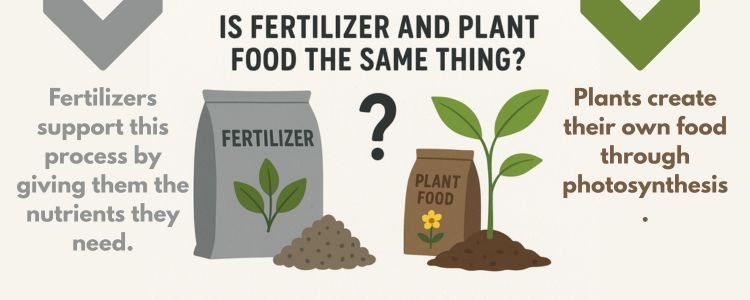
You grab a bag from the garden store shelf. Labels shout promises of green leaves and big blooms. But wait. One says “fertilizer.” Another calls itself “plant food.” Your mind races. Do these mean the same? Gardeners across the USA face this puzzle every spring. Plants need care. Yet confusion lingers. Let’s clear it up. This post dives deep. We explore what each term holds. We spot the real gaps. And we share smart ways to feed your yard. Ready? Plants wait for no one.
Is Fertilizer and Plant Food the Same Thing? The Truth Revealed
Gardeners often ask: is fertilizer and plant food the same thing. Words sound similar. Meanings differ. Understanding the difference helps gardens, lawns, houseplants.

What Exactly Is Plant Food?
Plants craft their own meals. They pull sunlight, water, and air together. This process brews sugars. Those sugars fuel growth. Science names it photosynthesis. Roots grab extras from soil too. Think carbon, hydrogen, oxygen. They form the base. But soil gives more. Nitrogen builds leaves. Phosphorus shapes roots. Potassium strengthens stems. Plants mix all this into food. No store-bought help needed at first. Nature handles the basics.
Yet gardens shift. Soil tires out. Rain washes goodies away. Then plants hunger. You step in. But first, grasp the core. Plant food lives inside the green world. It powers every leaf unfurl. Without it, stems droop. Flowers fade. Fruits shrink. Strong food means tough plants. They fight bugs. They shrug off dry spells. Your tomatoes ripen red. Your roses burst pink. Simple truth. Healthy food equals happy plants.
The University of Minnesota Extension states,
“Plants use a tremendous amount of energy to flower and produce fruit, seeds and nuts while continuing to develop a healthy root system and grow leaves for photosynthesis.”
They stress balance. Too little starves. Too much burns. Aim for steady supply. Watch your patch thrive.
Defining Fertilizer: The Soil Booster
Fertilizer steps up as a helper. It packs nutrients in a bag or bottle. You spread it on dirt. Roots soak it fast. Nitrogen leads the charge. It greens up lawns. Phosphorus digs deep for roots. Potassium guards against woes. Labels show N-P-K ratios. Like 10-10-10 for even feed. Or 5-10-5 for blooms.
This boost mends weak soil. Farms lean on it heavy. Backyard plots do too. Granules sink slow. Liquids hit quick. Spikes poke right in. Each type fits a task. Dry spells call for root aid. Bloom time craves flower fuel. Pick wise. Match your plants’ cries.
But hold on. Fertilizer isn’t magic dust. It skips the sugar-making part. Plants still cook their food. Fertilizer just stocks the pantry. Overdo it, and roots scorch. Underdo, and growth stalls. Balance rules here too.
Key Differences: Side by Side Now the heart.
Is fertilizer and plant food the same thing? Short answer: No. Plant food brews in leaves. Fertilizer feeds from below. One is home-cooked. The other, store-delivered. Plants make food daily. Fertilizer tops up soil gaps.
Dig deeper. Plant food draws from air and light. Vast supply there. Fertilizer targets soil lacks. Nitrogen, phosphorus, potassium shine bright. They form 3% of dry plant weight. Yet soil depletes them fast. Rain leaches. Crops harvest them out.
Forms differ too. Plant food stays internal. No spread needed. Fertilizer comes granular or liquid. Organic from compost. Synthetic from labs. Each releases at its pace. Slow for steady. Fast for fixes.
Impact varies. Plant food builds from within. It powers all life stages. Fertilizer tweaks the mix. High nitrogen greens veggies. High phosphorus roots new starts. Choose based on need. Test soil first. Labs reveal secrets.
Common mix-up? Labels blur lines. Brands call fertilizer “plant food” for sales zip. But experts push back. University of Maryland Extension notes, “Fertilizers contain nutrients, they are not ‘plant foods.’ Nutrients are directly absorbed by plant roots.” Clear cut. One supplies. The other uses.
Stats back the buzz. In 2022, USA farmers bought 20.5 million metric tons of fertilizers. Nitrogen topped at 11.96 million tons. Home gardens join in. Over 80% of US households garden yearly. Many reach for these boosts. Demand soars as yards green up.
Why the Confusion Hits Hard Garden aisles overflow.
Bags scream “feed your greens.” Terms swap spots. Newbies scratch heads. Old hands shrug it off. Marketing muddies waters. “Plant food” sounds cozy. Like a treat from the fridge. Fertilizer feels clinical. Like a pill from the doc.
History plays a part. Farms boomed post-war. Fertilizer sales spiked. By 1981, use hit 23.7 million short tons nationwide. Labels softened then. To woo backyard crowds. Today, 42 million US homes tend plots. Confusion tags along.
When to Reach for Fertilizer Soil test in hand.
Numbers scream low nitrogen. Time to act. Spring wakes roots. Add balanced mix. Watch shoots stretch. Summer heat drains potassium. Boost it then. Fall preps for winter. Phosphorus strengthens holds.
Veggies crave steady hits. Tomatoes need every two weeks. Liquid works fast. Flowers bloom bold. High phosphorus pushes petals. Lawns green even. Granules spread wide. Indoor pots sip slow-release. Spikes last months.
But pause. Not all plants beg. Succulents sip rare. Natives thrive on lean. Overfeed harms. Roots burn brown. Leaves crisp. Water runs tainted. Test yearly. Adjust smart.
Organic shines here. Compost breaks slow. Worms love it. Soil drinks deep. Synthetic zips quick. Fixes hunger fast. Blend both. Best of worlds.
Pros and Cons: Weigh Your Pick
Fertilizer packs punch. Quick green-up delights eyes. Yields climb high. Tomatoes pile plates. But runoff risks waters. Algae blooms choke streams. Cost adds up yearly.
Plant food? Internal magic. No waste there. Eco-kind always. Yet soil support lacks without aid. Growth slows in poor dirt. Balance key.
Choose organic for earth love. Synthetic for speed needs. Stats show shift. Organic sales rose 12% in 2024. Gardeners go green. Your yard wins either way.
Smart Tips for Garden Success .
“Fertilizer is important to plant growth, but it should not be mistaken for plant food.”
FAQ: Quick Answers to Common Questions
Q: Can I use fertilizer as plant food?
A: Fertilizer supplies nutrients. Plant food forms inside via photosynthesis. Use fertilizer to support food-making. It boosts, but doesn’t replace.
Q: How often should I fertilize my garden?
A: Depends on type. Liquids every two weeks. Granules monthly. Test soil first. Overdo harms more than helps.
Q: What’s the best NPK ratio for veggies?
A: Try 10-10-10 for balance. Shift to 5-10-10 for fruits. Match your crop’s stage.
Q: Are organic fertilizers better than synthetic?
A: Organics build soil life slow. Synthetics fix fast lacks. Blend for wins. Earth thanks organics.
Q: Does fertilizer hurt the environment?
A: Runoff can. Use right amounts. Buffer strips catch spills. Go organic to ease impact. **
Q: Why do my plants yellow despite fertilizer?
A: Check pH. Locked nutrients hide. Water issues block uptake. Adjust basics first.
