

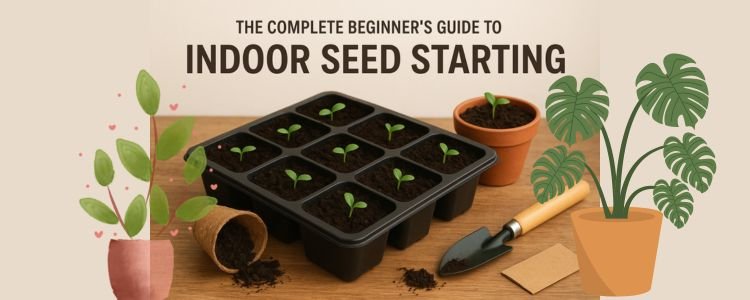
Indoor seed starting is one of the most useful skills a home gardener can learn. It saves money, gives you stronger plants, and lets you grow varieties you’ll never find at a garden center. This guide is written for absolute beginners in the U.S. and follows a simple, practical, step‑by‑step approach.
By the end, you’ll know exactly what to buy, when to start, and how to avoid the most common mistakes.
What Is Indoor Seed Starting?
Indoor seed starting means planting seeds inside your home weeks before the outdoor growing season begins. Instead of waiting for warm spring soil, you create a controlled environment indoors using light, warmth, and moisture.
This method is especially helpful in:
- Cold or unpredictable climates
- Short growing seasons
- Urban or suburban homes with limited outdoor space
Why Start Seeds Indoors Instead of Buying Seedlings?
Key Benefits for Beginners

Buying seedlings is convenient, but starting your own gives you healthier plants and better yields over time.
What Seeds Should Beginners Start Indoors?
Not all seeds are beginner‑friendly. Start with easy, forgiving plants.
Best Seeds for First‑Time Indoor Growers

When Should You Start Seeds Indoors?
Timing is critical. Starting too early creates weak, leggy plants. Too late wastes the advantage.
The Golden Rule
Start seeds 6–10 weeks before your last expected frost date.
Example Timing Table (U.S.)
| Plant | Start Indoors Before Last Frost |
| Tomatoes | 6–8 weeks |
| Peppers | 8–10 weeks |
| Lettuce | 4–6 weeks |
| Broccoli | 6–8 weeks |
Tip: Look up your local USDA hardiness zone to dial this in.
Beginner Seed Starting Supplies (What You Actually Need)
You don’t need a greenhouse or expensive tools. Focus on the essentials.
Core Supplies Checklist
| Item | Why You Need It |
| Seed trays or containers | Hold soil and seedlings |
| Seed starting mix | Light soil for root growth |
| Grow lights | Prevent leggy seedlings |
| Heat mat (optional) | Speeds germination |
| Spray bottle | Gentle watering |
| Labels | Prevent confusion |
Seed Trays vs DIY Containers
Store‑Bought Seed Trays
Pros
- Designed for drainage
- Uniform size
- Reusable
Cons
- Small upfront cost
DIY Containers (Cups, Yogurt Containers)
Pros
- Free
- Easy to find
Cons
- Must add drainage holes
- Inconsistent sizes
Beginner recommendation: Use proper seed trays for fewer problems.
Why Seed Starting Mix Matters
Garden soil is too heavy for indoor seedlings. It holds too much water and causes root rot.
Use a Seed Starting Mix That Is:
- Light and fluffy
- Sterile (reduces disease)
- Well‑draining
Never use straight outdoor soil indoors.
Grow Lights: The Most Important Tool
Most beginners fail because of poor lighting.
Why Window Light Isn’t Enough
- Sunlight is inconsistent
- Windows cause seedlings to stretch
- Day length is too short in late winter
Best Grow Lights for Beginners
| Feature | What to Look For |
| Type | LED shop or grow lights |
| Color | Full spectrum or daylight |
| Distance | 2–3 inches above plants |
| Timer | 14–16 hours per day |
This is the #1 place worth spending money.
Do You Need a Heat Mat?
Heat mats warm the soil, not the air.
Seeds That Love Warm Soil
- Peppers
- Tomatoes
- Eggplant
- Herbs
Seeds That Don’t Need Heat
- Lettuce
- Spinach
- Kale
Heat mats aren’t mandatory, but they speed up germination and improve success rates.
Step‑by‑Step: How to Start Seeds Indoors
Step 1: Prepare Containers
- Add drainage holes if needed
- Place trays on a waterproof surface
Step 2: Add Seed Starting Mix
- Lightly moisten soil
- Fill containers loosely
- Do not pack down
Step 3: Plant Seeds
| Seed Size | Planting Depth |
| Tiny | Surface + light cover |
| Medium | 1/4 inch |
| Large | 1/2 inch |
Rule: Plant seeds 2–3× their size deep.
Step 4: Water Gently
- Use spray bottle or bottom watering
- Soil should be damp, not soaked
Step 5: Provide Warmth
- Use heat mat if needed
- Ideal soil temp: 65–75°F
Step 6: Add Light Immediately
- Turn on grow lights once seeds sprout
- Keep lights close to plants
Watering Seedlings Correctly
Overwatering kills more seedlings than anything else.
Best Practices
- Water when soil surface feels dry
- Bottom water when possible
- Empty standing water after 30 minutes
Seedlings prefer consistent moisture, not soggy soil.
How Long Should Grow Lights Stay On?
- 14–16 hours per day
- Use a timer for consistency
- Darkness is important too
Plants need rest just like people.
When and How to Thin Seedlings
If multiple seeds sprout in one cell:
- Cut extras with scissors
- Do NOT pull them out
This prevents root disturbance.
Fertilizing Seedlings (Beginner Safe Method)
Seed starting mix has little nutrition.
When to Start Feeding
- After first true leaves appear
What to Use
- Liquid fertilizer at ¼ strength
- Apply every 10–14 days
Overfeeding causes weak growth.
Common Seed Starting Problems (and Fixes)
| Problem | Cause | Fix |
| Leggy seedlings | Not enough light | Lower grow light |
| Mold on soil | Too wet, poor airflow | Water less, add fan |
| Seeds not sprouting | Cold soil | Use heat mat |
| Yellow leaves | Lack of nutrients | Light fertilizer |
Hardening Off: The Step Beginners Skip
Indoor plants must adjust to outdoor conditions.
How to Harden Off
Day 1–2:
- 1–2 hours outside in shade
Day 3–4:
- 3–4 hours, some sun
Day 5–7:
- Full day outside
Never skip this step.
When to Transplant Seedlings Outdoors
Seedlings are ready when:
- They have 2–3 sets of true leaves
- Outdoor temps match plant needs
- Frost danger has passed
Transplant in the evening or on cloudy days.
Beginner Budget Setup (Simple & Effective)
| Item | Budget Choice |
| Grow light | LED shop light |
| Tray | Reusable plastic tray |
| Soil | Basic seed mix |
| Heat | Optional heat mat |
You can start successfully for under $50.
FAQs
Can I start seeds without grow lights?
Yes, but success rates are much lower. Grow lights make the process predictable.
How many seeds should I plant per cell?
Plant 2–3, then thin to the strongest seedling.
Why are my seedlings falling over?
This is usually due to weak light or damping‑off disease.
Can I reuse seed starting soil?
Not recommended. Old soil can harbor disease.
How early is too early?
More than 10 weeks before last frost usually causes problems.
Final Thoughts
Indoor seed starting looks complicated, but it’s really about light, warmth, and patience. Start small your first year. Learn from mistakes. Each season gets easier.
Once you grow your first healthy seedlings, you’ll never want to rely on store‑bought plants again.
