

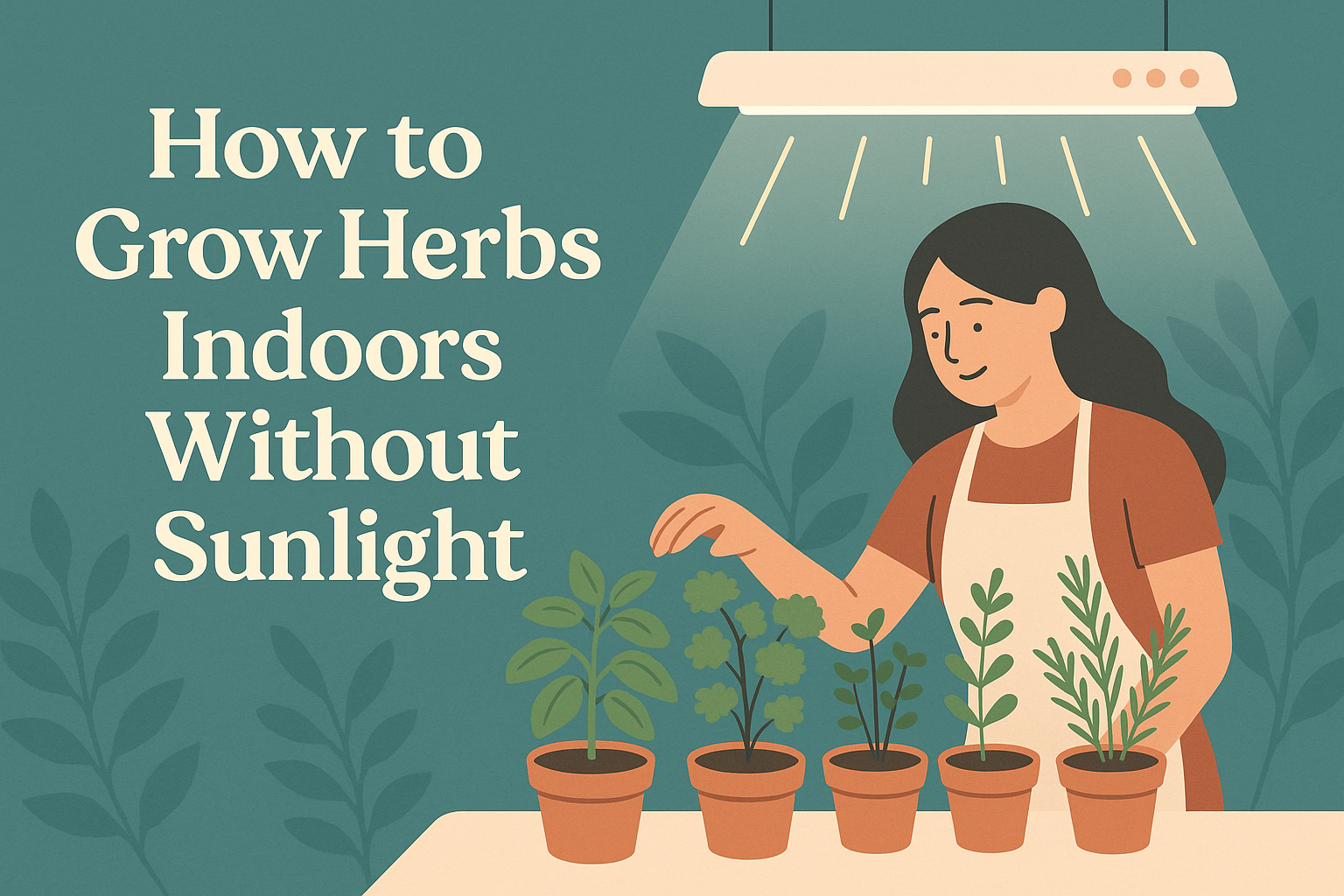
Growing herbs indoors without direct sunlight might sound tricky. But it is absolutely doable. You can still have fresh herbs in your kitchen, even in a low-light room. This guide will walk you through every step. Let’s dive in.
The U.S. indoor farming market size was estimated at USD 4.99 billion in 2025 and is projected to grow rapidly at a compound annual growth rate (CAGR) of 11.9% from 2024 to 2030. Grand View Research
Why grow herbs indoors without sunlight?
Lots of people live in apartments or homes where windows face north, or they have few hours of direct sun. But herbs don’t always need full sun. With the right setup, you can make them thrive.
According to one guide:
“If where you’re growing your herbs doesn’t have access to natural light, you can substitute that with artificial lights.”
Also: The indoor gardening market in the U.S. and beyond is booming. For example, the U.S. indoor farming market was estimated at USD 4.99 billion in 2025 and is projected to grow quickly. That growth shows there’s strong interest in growing plants indoors—herbs included.
Choose the right herbs
Not every herb thrives in dim or indirect light. Choose varieties that tolerate less sun. Some good options:
- Mint – adapts well to lower-light zones.
- Chives – tolerates indirect light and compact spaces.
- Parsley – can grow with moderate to low light.
- Lemon balm – handles partial shade.
- Oregano, thyme – more light-loving, but can still adapt with supplemental light.
A source says:
“To grow well indoors, herbs should have shallow roots … they should also be able to handle different light situations … including receiving mostly indirect light.”
So pick the herbs carefully, based on how much actual sunlight or artificial light you can provide.
Create the right lighting setup (sunlight = optional)
Artificial light: how much and what kind
Use full-spectrum LED grow lights. Place the lights close enough so the herbs receive enough light hours. Indoor herb-growing guides suggest using artificial lights when natural light fails.
A good target is 12 to 14 hours of light per day when using artificial lights, especially if your natural light is minimal.
Position the light 6-12 inches above the foliage (check manufacturer specs). Rotate the plants or the light so growth is even.
Natural light alternatives
If you have some indirect light (east- or north-facing window), you can supplement with a grow light. Even plants with low to moderate light needs will benefit.
The guide at Gardenary says: “Give your plants plenty of space to spread out and grow … Rotate your plants every couple of days so that the leaves receive light evenly. Supplement with artificial light if needed.”
So even if you have limited natural light, adding a simple LED will cut the gap.
Pick containers & soil
Good containers and soil make major difference.
-
Use pots with drainage holes. Without good drainage the roots get soggy and rot. A blog warns: “The surest way to kill an herb is to overwater it in a container with poor drainage.”
-
Terra-cotta or clay pots are good – they breathe better than heavy plastic.
-
Use potting mix labeled for indoor plants or herbs. Soil should be loose, well-draining.
-
If space is tight, shallow pots work. Herbs often have shallow roots. The blog says pots only six inches deep can suffice.
Temperature, humidity & watering
Even without direct sun, these factors matter.
-
Aim for temperatures between 65-75°F (about 18-24°C). Too cool slows growth; too warm stresses plants.
-
Indoor air tends to be dry, especially with heating/air-conditioning. Increase humidity by placing a tray of water near the plants or misting occasionally.
-
Water when the top inch of soil feels dry. Don’t let the soil stay soggy. Overwatering is a common mistake.
One guideline for indoor herbs: “Watering should be done only when the soil feels dry to avoid root rot.” -
Good air circulation helps. Avoid stagnant corners.
Feeding and maintenance
-
Use a mild liquid fertiliser (half-strength) every 4-6 weeks when plants are actively growing.
-
Prune often. Pinch back the tips of herbs like basil, mint, oregano. Pruning encourages bushy growth rather than legginess.
-
Harvest regularly. Cutting leaves keeps the plant busy producing more.
-
Watch for pests like aphids or spider mites. Indoors they can sneak up. Wipe leaves, rinse the plant, or use safe insecticidal soap if needed.
Step-by-step: how to set it up (for minimal sunlight spaces)
-
Choose your spot: a table or shelf near a window (even if indirect light) or any dedicated indoor area.
-
Pick pots (with drainage) and fill with good potting mix.
-
Plant your herbs (seedlings or seeds). If using seeds, follow depth and spacing instructions.
-
Place your LED grow light above the plants. Set a timer for 12-14 hours of light.
-
Water lightly after planting. Then let soil top inch dry before the next watering.
-
Feed after about 4-6 weeks. Prune regularly from week 2 or 3 onward.
-
Rotate the pots a little so growth stays even.
-
Harvest leaves as needed for cooking. Take care not to remove more than one-third of foliage at a time.
-
Monitor for any signs of stress: leggy stems (too little light), yellowing leaves (possible overwatering), pests (small specks, webbing).
-
Adjust light height or duration if stems grow too spindly. If leaves pale or look weak, increase light time or move closer.
Common problems & solutions
-
Leggy plants: Stems are long and spindly, leaves few. Solution: Increase light time/intensity or move light closer.
-
Leaves turning yellow/brown: Might be overwatering or poor drainage. Check soil moisture and drainage.
-
Slow growth: Could be low nutrients, low light, or average temperature too cool. Try feeding, move light closer, warm up the room.
-
Pests: Indoors they hide under leaves. Clean plants, spray with safe insecticidal soap if needed.
-
Crowded roots: When herbs are in small pots for too long, growth slows. Consider repotting into slightly larger containers.
Which herbs are easiest in low/light spaces?
Here are herbs that tolerate less bright light and are good for indoor spaces without full sun:
-
Mint
-
Chives
-
Parsley
-
Lemon balm
-
Cilantro (though it bolts faster)
-
Oregano (will still do ok with supplemental light)
The blog partly states: “Herbs that perform well in indoor environments with limited sunlight include mint, chives, parsley and coriander.”
Once you master these, you can try more light-demanding ones.
Benefits of growing herbs indoors without sunlight
-
Constant access to fresh herbs right in your kitchen.
-
Save money on buying fresh herbs from the store. One article says: “Growing your own herbs at home … costs about $30 a year.”
-
Even with minimal outdoor space, you can garden.
-
Indoor greenery improves your space visually, and some herbs help indoor air quality.
-
More control over conditions – less risk from pests, weather or outdoor heat/cold.
Myth-busting
-
Myth: “Herbs won’t grow if they don’t get full sun.”
Fact: They can grow using indirect light plus artificial lighting. The key is enough hours of suitable light. -
Myth: “You need a big outdoor garden to grow herbs.”
Fact: Herbs often have shallow roots and can thrive in small containers indoors. -
Myth: “Indoor herbs don’t taste as good.”
Fact: If they are grown well (right light, soil, water), their flavor can be excellent and even superior to store-bought.
Final thoughts
You do not need full sunlight to enjoy a thriving indoor herb garden. With the right herbs, a simple grow-light setup, good soil, and care you can achieve fresh, flavorful herbs year-round—even in low-light spaces. The main keyword here is how to grow herbs indoors without sunlight, and this guide has laid out the steps clearly.
Start small. Pick two or three herbs suited for indoor growth. Monitor, learn, and adjust. Soon you’ll have fresh leaves to snip for recipes, and the added bonus of greenery brightening your indoor space.
Frequently Asked Questions (FAQ)
Q1. Can I grow herbs indoors if I have no windows at all?
Yes. You’ll rely entirely on artificial grow lights. Choose herbs tolerant of low light, use full-spectrum LEDs for 12–14 hours per day, ensure proper drainage, and care for soil moisture and temperature.
Q2. How long will herbs last indoors without sun before needing replacement?
If conditions are good, several months to a year or more. Prune regularly and repot when roots become cramped. Some herbs may slow down but remain usable.
Q3. Are there herbs that definitely need full sun and should be avoided for low light rooms?
Yes. Herbs like basil (in its most sun-loving varieties), sage, and rosemary prefer strong light and may struggle without it. Though with supplemental light they may still do ok.
Q4. Do I need special fans or humidity controls for indoor herbs?
Not always. Good air circulation helps, so a small fan on low is fine if space is enclosed. Humidity trays or occasional misting can help in dry indoor climates.
Q5. What’s the minimal light hours my herbs need if using a grow light?
Aim for 12 to 14 hours of grow light per day when natural light is minimal. If you have some indirect natural light, you may reduce artificial light slightly—but keep consistency.
