

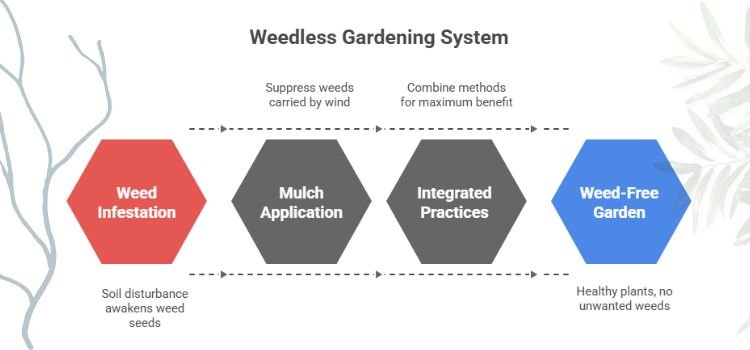
An unintended effect of turning over or stirring up the soil is, essentially, to sow weeds. Rototilling, plowing, and hand-digging will bury and uproot existing weeds, but these activities also expose to light and air the many weed seeds (140 per pound of soil by one count) lying at various depths within virtually every bit of ground. Sun and oxygen are just what these weed seeds have been waiting for to sprout.
Not all weeds start out as seeds awakened from within the soil. Weeds also sprout from seeds that are carried into the garden by wind or hitchhike on (or within) animals. A thin mulch over the soil, renewed yearly, takes care of most weeds that arrive in this manner.
You cannot, of course, just banish the words rototill, dig, and plow from your vocabulary, throw some mulch on the ground, and carry on with your gardening as before. These practices, for maximum benefit, need to be integrated into a Weedless Gardening system. The bare bones of Weedless Gardening, elaborated on in coming chapters, have four components.

1. MINIMIZE SOIL DISRUPTION
to preserve the soil’s natural layering. Soil should not be turned over by hand, by rototiller, or by plow. Even when setting transplants, shrubs, and trees in the ground, take care not to disrupt the natural layering of the soil any more than necessary.
2. PROTECT THE SOIL SURFACE
with some sort of covering to temper the effects of hot sun and raindrops on the surface and to smother small weed seedlings. What to use depends on the availability of various materials, your style of garden, and the kinds of plants you grow. In some situations, living plants might offer the needed protection.
3. AVOID SOIL COMPACTION
by keeping off planted areas with feet, wheelbarrows, garden carts, and tractors. This is done by designating separate areas for plants and for traffic. The design of trafficked areas (usually paths) varies with the design of the garden and the kind of traffic expected.
4. USE DRIP IRRIGATION.
Watering is not always needed, but when it is required regularly, drip is the way to go. Drip irrigation quenches plants’ thirst at a rate close to their actual needs. It pinpoints the water where it’s needed, instead of wastefully wetting paths and weeds in unplanted areas.
More on the details and wrinkles of Weedless Gardening later on. For now, lest the idea of spending only a few minutes per week weeding is not enough to convince you to adopt this system, an enumeration of other benefits likely will.
Agricultural researchers have been able to reduce the sprouting of weed seeds by tilling at night instead of by day. Weeds affected were broadleaf annuals such as lamb’s-quarters, pigweed, smartweed, and ragweed. These small seeds don’t have enough reserves to support growth for long in dark soil, and so would be expected to need light for germination.
But hold off donning your military-issue night-vision goggles and going out to rototill tonight. Seeds of grasses and large-seeded broadleaf weeds do sprout well following cultivation in light or darkness: they’re only waiting for a breath of air to awaken them.
If you do choose to till at night, be careful about using any light, even a flashlight, because even short bursts of light can induce germination in those small-seeded annuals. Also, avoid moonlit nights because the silvery glow might be bright enough to induce sprouting of light-sensitive seeds brought to the surface.
